
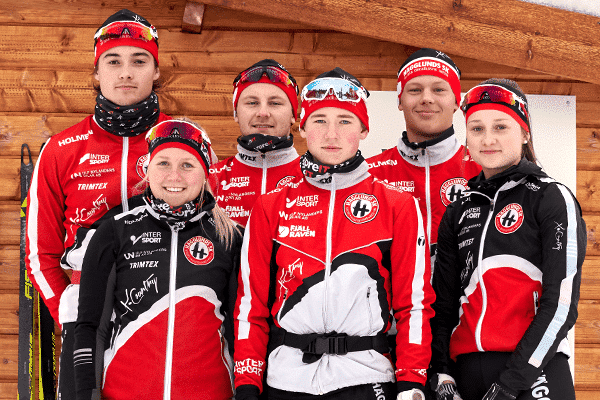
Hugo Eriksson
(H19/20)
What does a season usually look like?
A regular season during winter is usually filled with competitions. When I plan the racing season, I usually start with the more important races where I want to be in shape and then fill in with as many races as possible. There is usually a race almost every weekend during the winter. Then we have it a little calmer in April before the training season starts again in May. There is often a focus on quantity during the summer and a little more focus on intensity during the fall before the competition season starts.
How often do you train/compete?
As I said, I compete almost every weekend during the winter and the training varies from week to week but it is anything between 8-20 hours a week plus about 2-3 strength sessions per week.
Alexander Gidlund
(H19/20)
Would you recommend ski school to others?
I would definitely recommend ski school to more people!
What is the advantage of that?
The advantage of attending a ski school is that you get very good help from professional coaches who know their stuff. You also get the opportunity to train during the day, which is very nice so that you do not have to go out and train in the evening when you are tired or want to do something else. In addition to this, I would recommend going to ski high school because you get many new friends with the same interests as yourself.
Lovisa Olsson
(D19/20)
What is the most fun thing about skiing?
The most fun thing about skiing is that you get to see how you develop and get better. For example, how your technique improves or how you get stronger. And it’s even more fun when you get to do it with your friends who have the same interest as you. Through skiing, I have made a lot of friends that I might not have met otherwise.
What made you start skiing?
Skiing has more or less always been a part of my life. When I was very young, my mom put ski boots on me and skis on my feet so I could try skiing. I also remember that she took me and my older brother so that we could go on the children’s Vasalopp. What made me start skiing “for real” was that I was in a ski school. I think that’s when I realized that I really enjoyed skiing. After the ski school, I joined Husum ski club and started to train regularly with the club.
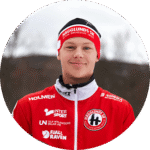
Isak Seijsing
(H19/20)
What would you say to someone who has never skied before?
If you are starting to ski or have skied very little, I would say that it is important to have good equipment. With bad equipment it will not be a great experience. My second tip is to get in touch with someone who knows how to ski so that you can get some tips and advice on technique.
How do you see the future of skiing?
I think the future looks quite bright with cross-country skiing becoming more and more established, plus more and more media attention being paid to skiing. One concern is how doping will affect the sport.
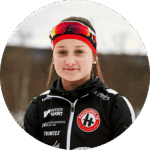
Elsa Eriksson
(D17/18 = New junior 2019/20)
What do you think is the best way to prepare for a competition?
Of course, it feels much better to stand on the starting line if you know that you have been able to train well the time before. Then, of course, food and sleep are important to feel prepared. Riding the course and, for example, testing difficult curves several times can feel safe so that you know how to handle them in the best way.
Do you or any of you have any “do’s” and “dont’s” before a competition?
Everyone has their own particular routines and some are probably more careful than others to stick to them. My routine is to try to get a good amount of sleep. I eat porridge for breakfast on race day. I like to ride the race track beforehand so that I know how it goes. Then I like to listen to music and “go into my own bubble”. 40 minutes before the start I start warming up and 30 minutes before I take my asthma spray.
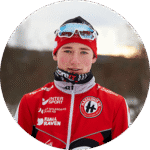
Viktor Olsson
(H17/18 = New junior 2019/20)
What is your best feature?
I am willing to train.
What is your goal in skiing?
My main goal is to improve in cross-country skiing.
